
 Made in USA
 Eco-Friendly
 Low/Zero VOC
LAS-320 · Penetrating Asphalt Sealer
It seals from inside the asphalt, not on top of it.
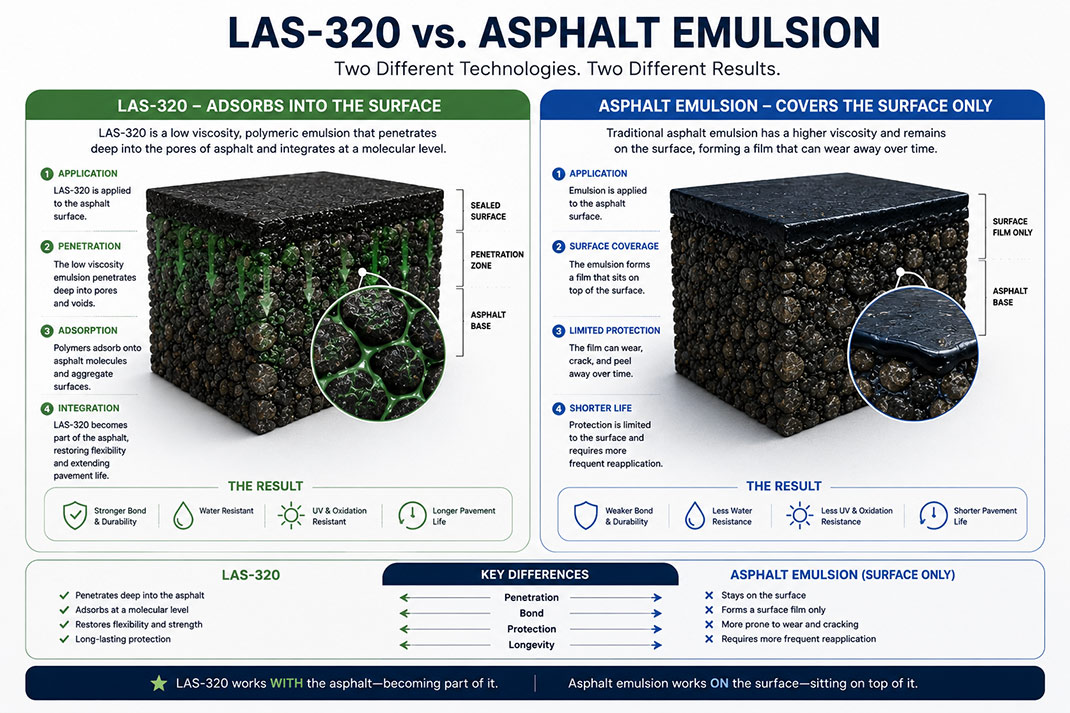
LAS-320 is a unique polymeric emulsion that penetrates and integrates into the asphalt surface providing superior protection against environmental damage
-
94 g/LVOC content
-
~15 mindry to traffic
-
~100 sf/galcoverage rate
-
10+ yrsservice life
-
ZEROcarcinogens
The difference
Coating vs. bonding
Most sealcoat emulsions including coal tar dry into a topical film that sits on the surface. It looks fine on day one but flakes, cracks, and wears down because it was never part of the surface to begin with. LAS-320 works differently; it’s Nano particles absorb into the pore structure and bonds there.
Root cause
What actually destroys a pavement?
Asphalt doesn’t fail from traffic wear alone — it also fails from water, freeze-thaw, and UV oxidation.
Sun and heat speed up the breakdown of the asphalt binder — the oil that holds the aggregate together. Salt and other chemicals act as a catalyst. Once oxygen and water reach the binder, a chemical reaction starts: a small amount hardens the surface in a normal curing process, but left unchecked, that same reaction continues until the binder is gone, the surface turns brittle, and the pavement breaks down into loose stone.
Sealing interrupts that reaction before it starts, rather than patching the damage after it happens.
LAS-320 Vs coal tar
The common alternative comes with a health warning
Coal tar sealcoat is still the default on many driveways and playgrounds. It also carries high levels of polycyclic aromatic hydrocarbons (PAHs) — compounds linked to cancer risk and environmental contamination. A number of cities now restrict its sale or use, and some municipalities have pursued manufacturers over cleanup costs.
| Property | LAS-320 | Coal tar |
|---|---|---|
| PAH content | None | High |
| Odor during cure | None | Strong |
| Track-in risk | None — dry in ~15 min | High, few days |
| VOC content | 94 g/L | Typically much higher |
| Toxicity / flammability | Non-toxic, non-flammable | Hazardous |
| Behavior over time | Flexes with pavement | Stiffens, cracks, fades |
For more on the health and environmental concerns tied to coal tar sealants, see the independent overview from Consumer Notice, a consumer advocacy resource on product and environmental hazards.
At a glance
Some of the benefits of using LAS-320
No odor, no tracking
No unpleasant odor and dries to
the touch in about 15 minutes.
Will not track when dry.
PAH-free
No polycyclic aromatic hydrocarbons — none of the carcinogens found in coal tar sealcoat.
Repels fuel, oil & chemicals
Resists most common liquids that would otherwise stain or soften unsealed asphalt.
Low VOC — 94 g/L
Well under most regional VOC limits for pavement coatings.
Fast cure
Ready for foot and light vehicle traffic in roughly 15 minutes under normal conditions.
Non-toxic, non-flammable
Safe to store, transport and apply without hazardous-material handling.
In the field
Proven on airfields, commercial/industrial sites and residential driveways alike
Completed in under two hours
Broom applied, no special equipment needed
Kenai Municipal Airport
350,000 sf, Re-treatment after 10-years
Re-treated taxiways and staging areas originally sealed a decade earlier.
400,000 sf applied at a working rail facility
Large-format commercial application on an active industrial site.
Spray-applied taxiway
Fast dry time made the surface usable again the same day.
20 acres, spray-applied with conventional equipment
Asphalt spray rig covering surface at rail tank chemical transfer site
Application
Three ways to apply it, one result
Small jobs, no equipment
Pour directly onto the surface and spread with a push broom. The most common approach for driveways and small lots.
Mid-size surfaces
A standard airless paint sprayer covers larger residential and light-commercial areas quickly and evenly.
Commercial & industrial
Conventional asphalt spray equipment for parking lots, airports and industrial sites.
Ordering